The practice
Sensory Deprivation Float Tank Benefits: What the Research Shows (and What It Doesn't)
Here is what nobody tells you before your first float: the first fifteen minutes are not relaxing. You lie in warm, salty water in the dark, the music fades out, and your mind, with nothing else to chew on, starts running the tape. The email you didn't answer. The thing you said in 2019. Whether that itch on your nose is a problem. Then, somewhere past the half-hour mark, something shifts. That gap between the discomfort and the quiet is the whole reason to try it.
The short answer on sensory deprivation float tank benefits: the evidence supports short-term drops in anxiety, deep muscle relaxation, and possibly some relief from tension pain. It does not support the bigger claims you'll see on spa menus. The Stoic case is different and, I think, stronger. A float is a controlled dose of the one thing modern life has engineered away, which is being alone with your own head.
This guide separates what the studies actually found from what floating centers would like you to believe, explains why this belongs in a voluntary-discomfort practice, and tells you honestly who should skip it.
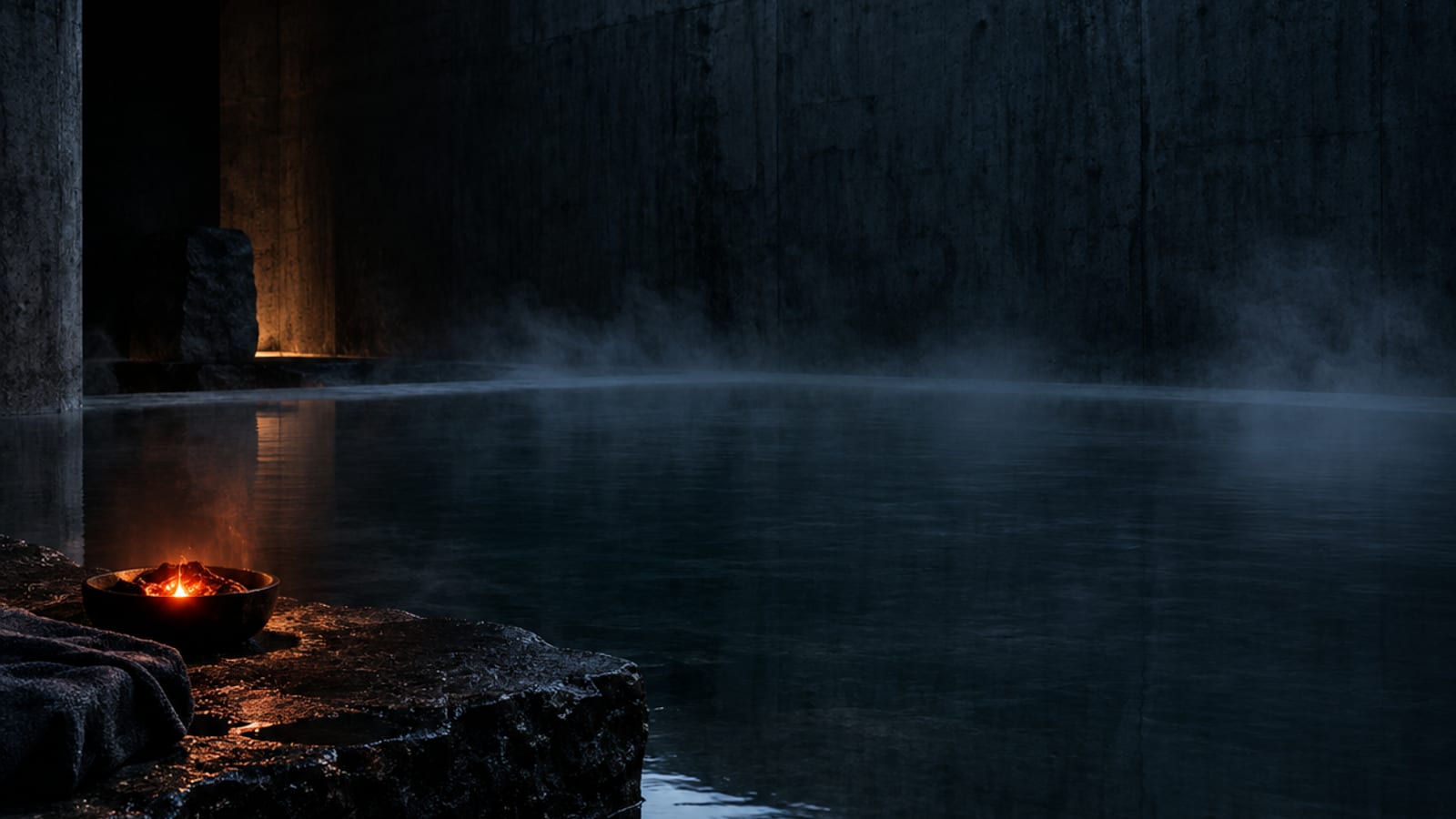
What a float tank actually is
A float tank (also called an isolation tank or float pod) is an enclosed tub holding roughly ten inches of water saturated with Epsom salt, which is magnesium sulfate. Centers typically keep the water near skin temperature and run the session in darkness and near silence. The salt makes you buoyant enough that you float on your back without effort. Because the water matches your skin temperature, after a while you stop feeling where your body ends and the water begins.
The technique dates to the 1950s, when neuroscientist John Lilly built the first tank to see what the mind does when outside input drops away. The researcher who did most to turn it into a clinical method was psychologist Peter Suedfeld, who named it Restricted Environmental Stimulation Technique, or REST. When a study says "Flotation-REST," it means exactly this: lying in a tank, in the dark, for about an hour.
One correction to the name. "Sensory deprivation" oversells it. You still feel your breath, your pulse, the water on your skin, and your own thoughts. What you lose is the constant outside input: light, sound, pressure, temperature swings, and the gravity that usually makes your muscles work. The tank removes the noise so you can hear what was always there underneath.
What the research shows
The research on floating is real but small. Here are the three findings worth knowing, with the caveats attached.
Anxiety and mood, after one session.In 2018, a team led by Justin Feinstein at the Laureate Institute for Brain Research had 50 people with anxiety and stress-related disorders float for an hour. Afterward, they reported significantly lower anxiety and a lift in mood. The finding is encouraging, but the design was a before-and-after comparison with no control group, so we can't say how much came from the tank and how much from simply lying still in a dark, warm room for an hour.
Anxiety, across repeated sessions.A small randomized pilot by Jonsson and Kjellgren in 2016 tested repeated float sessions against a waitlist in people with generalized anxiety disorder. The float group had reduced anxiety and depression symptoms. That is a step up in design from the 2018 study, but a pilot is still a pilot: small numbers, and no comparison against another relaxation method. If you're interested in the wider evidence on chosen stress and mood, our breakdown of cold exposure for anxiety and depression goes through a similar mix of promise and limitation.
Muscle tension and pain. A 2001 study by Kjellgren and colleagues looked at people with chronic tension-type neck and shoulder pain and found reductions in pain after floating. It was small, and pain studies are famously easy to muddy with expectation. But the mechanism is easy to believe: take gravity, noise, and posture out of the picture and tense muscles have less reason to stay tense.
Where the evidence runs out
A few recurring claims deserve a straight answer, because this is where the marketing outruns the science.
Reasonably supported
- Lower state anxiety right after a session
- Mood improvement in the short term
- Deep muscle relaxation
- Some relief from tension-type neck and shoulder pain
- A rare chance to practice unstructured quiet
Mostly hype
- "Detoxing" your body
- Fixing magnesium deficiency through your skin
- One hour equals eight hours of sleep
- Making you smarter or more creative on demand
- Curing depression or anxiety on its own
Two more points of honesty. First, most float studies can't blind participants: everyone knows they're in a tank, and people who book a float tend to expect to feel better. Expectation is a real effect, and the research can't fully separate it out. Second, we don't know the right dose. Studies use about an hour, and some use repeated sessions, but there is no evidence-based answer to "how often should I go."
I'm not saying this to talk you out of it. I'm saying it because a practice you understand accurately is one you can keep. If you go in expecting a miracle, one flat session will feel like a failure. If you go in expecting a hard, useful hour, you'll get one.

Why floating counts as hard mode
Most voluntary discomfort is physical: cold, hunger, weight on your back. A float tank looks like the opposite. It's warm, weightless, and asks nothing of your muscles. So why does it belong here?
Because the discomfort is internal. In a well-known 2014 study published in Science, Wilson and colleagues left people alone with their thoughts for up to 15 minutes, with nothing to do. Many reported they didn't enjoy it, and a number of participants chose to give themselves a mild electric shock rather than keep sitting there. Read that again. Given a choice between a jolt and their own company, some people took the jolt.
It is in your power, whenever you choose, to retire into yourself.
Marcus wrote that while emperor of Rome, a man with no shortage of places to escape to. His point was that the real retreat isn't a country house or a beach. It's a mind you can stand to be inside. That is a trained ability, and most of us let it decay because our phones offer an exit every ninety seconds. A float tank takes away every exit and leaves you with the question the Stoics kept asking: can you be steady here, with nothing to hold on to?
This is the same logic as any askēsis. A cold shower trains you to stay calm when the body is screaming. A float trains you to stay calm when the mind is. If you've read our piece on the benefits of silence and solitude, this is the most extreme, most controlled version of that practice you can buy by the hour.
What your first float feels like
Expect a rough sequence. It varies, but here is the pattern most first-timers describe, and the one I went through.
- The fidget phase.You adjust your neck, your arms, your position. You touch the wall. You check the time even though there's no clock. This is your nervous system asking for input.
- The noisy-mind phase. Thoughts get loud, often unpleasant ones. This is the part that makes people bail early. It is also the part doing the training.
- The drop. At some point the body goes heavy, then oddly weightless, and the mental chatter thins out. Some people drift toward sleep. Others get a strange, clear calm.
- The return. The lights or music come back. You climb out slowly, showered and slightly dazed, and the world feels a little quieter for a few hours.
Some people report vivid imagery or a sense of time distortion. Others feel nothing special and simply got an hour of rest. Both are normal. Don't chase a peak experience. Chasing one is a distraction of its own, and it's exactly the sort of grasping the Stoics would tell you to drop.
How to get the most from a float
Most of the value comes from how you approach it, not the gear. A few practical rules from experience:
- Choose a clean, well-run center.Ask how they filter and sanitize between sessions. The high salt concentration inhibits bacteria, but a good operator will still talk to you about filtration and cleaning without hesitation. If they can't, go elsewhere.
- Skip the shave beforehand. Fresh nicks and cuts sting badly in saturated salt water. Same for freshly waxed skin. Give it a day or two.
- Eat a light meal first, and skip caffeine. Hunger will nag you, and a full stomach is uncomfortable. A jittery body makes the fidget phase longer.
- Go in with a purpose, not a goal.Something like "I'm going to watch my thoughts without arguing with them" works. "I'm going to achieve enlightenment" does not.
- Use the door and the light.Most tanks let you open the lid and turn on a light. Knowing you can leave is what makes staying a choice, which is the Stoic point. It's discomfort you elected, not a cage.
- Give it three tries before judging.The first session is dominated by novelty and neck adjustments. Many people say the second and third are where it starts to settle. That's anecdote, not data, but it matches how most skills work.
If you like the idea of stacking a hard physical practice with a quiet one, floating pairs naturally with heat or cold. Our guide to contrast therapy with sauna and ice bath covers the physical side, and a float session afterward is a common way people finish the day.

Who should skip it or ask first
For most healthy adults, floating in a properly maintained tank is low risk. But "most" isn't everyone, and a few groups should talk to a professional first:
- Mental health conditions. If you have a history of psychosis, or panic disorder, or you are prone to dissociation, removing outside input can stir things up rather than settle them. Ask your clinician before you book. Anxiety-related benefits in the studies came from supervised, research-grade sessions, not from someone alone in a dark tank on a bad week.
- Claustrophobia. Many modern tanks are large rooms, not coffins, and you can leave the door open. If enclosed spaces are a real problem for you, choose an open room-style setup or skip it.
- Medical issues. Epilepsy, heart conditions, blood pressure problems, kidney disease, and pregnancy all warrant a conversation with your doctor. Open wounds, skin infections, and contagious conditions mean you should wait.
- Alcohol or drugs.Never float impaired. You're in a tank of water, and your judgment is what keeps you safe in it.
- Ears, eyes, and salt.Salt water in the eyes stings badly, so keep your hands away from your face and use the towel and spray bottle most centers provide. Earplugs help if you're prone to water in the ears.
So: is a float tank worth it? As a spa treat, maybe. As a piece of a voluntary-discomfort practice, yes, if you go in clear about what it is. It won't detox you or rewire your brain in a weekend. It might lower your stress for a few hours, ease a tight neck, and, more usefully, show you how much of your day is spent avoiding your own company. That last thing is worth an hour of your time. The person who can lie in the dark with nothing and stay steady is the same one who can stay steady when the noise comes back.
Sources
- [1]Feinstein et al. (2018), 'Examining the short-term anxiolytic and antidepressant effect of Floatation-REST', PLOS ONE — One-hour floats in people with anxiety and stress-related disorders; lower state anxiety and improved mood afterward. Pre-post design, no control condition.
- [2]Jonsson & Kjellgren (2016), 'Promising effects of treatment with flotation-REST as an intervention for generalized anxiety disorder', BMC Complementary and Alternative Medicine — Small randomized pilot: repeated float sessions vs. waitlist, with reduced anxiety and depression symptoms in the float group.
- [3]Kjellgren, Sundequist, Norlander & Archer (2001), 'Effects of flotation-REST on muscle tension pain', Pain Research and Management — Small study in people with chronic tension-type neck and shoulder pain; reported reductions in pain after floating.
- [4]Wilson et al. (2014), 'Just think: The challenges of the disengaged mind', Science — Participants left alone with their thoughts for up to 15 minutes; many found it unpleasant, and a number chose to shock themselves rather than sit still.
- [5]Marcus Aurelius, Meditations, Book 4 (MIT Classics) — The passage on retiring into yourself rather than seeking a retreat elsewhere.
Make it daily
Keep the streak where you'll see it
Reading about discomfort changes nothing. Doing one hard thing a day, every day, is what rebuilds self-trust. StoicNow puts your challenge and your streak on your lock screen — so you can't quietly skip it.
Founding members get 3 months of Premium free. Launching 2026.
Questions people actually ask
What are the benefits of sensory deprivation in a float tank?+
The best-supported benefits are short-term: lower anxiety and better mood after a session, deep physical relaxation, and in small trials, less muscle-tension pain. The studies are small and often lack strong controls, so treat these as promising, not proven. The Stoic benefit is separate: practice sitting with your own mind and no distractions.
Is a float tank the same as sensory deprivation?+
Roughly. A float tank is the most common way to do it. You lie in shallow, body-temperature water saturated with Epsom salt, in a dark, quiet enclosure. Researchers call the method Flotation-REST, for Restricted Environmental Stimulation Technique. It does not remove all sensation, since you still feel your breath and heartbeat. It removes most of the outside noise.
How long should you float, and how often?+
Most centers sell 60 to 90 minute sessions, and the research uses about an hour. One float can shift how you feel that day. The one longer trial we cite here used a dozen sessions over seven weeks. There is no proven best frequency, so start with a single session and see whether repeating it helps.
Can floating help with anxiety or depression?+
It may help with anxiety in the short term. A 2018 study of people with anxiety disorders found lower anxiety and better mood after one hour, and a small randomized pilot found fewer symptoms in generalized anxiety after repeated floats. It is not a treatment replacement. If anxiety or depression is disrupting your life, see a clinician first.
Is floating safe, and who should avoid it?+
For most healthy adults it is low risk when the center keeps the water clean. Talk to a doctor first if you are pregnant, have epilepsy, heart or blood pressure problems, open wounds or skin infections, or a history of psychosis, panic disorder, or severe claustrophobia. Never float while intoxicated, and get out if you feel unwell.
Written by
Marcus HaleWriter & Stoic-practice researcher
“I'm not a doctor or a psychologist. I'm someone who has practiced this daily for years and reads the Stoics closely. Where health is involved, I cite the research and tell you to talk to a professional.”
Keep reading
The field notes
One honest practice, most weeks
No hype, no streak-shaming. Occasional letters on doing voluntary discomfort without wrecking yourself.