The practice
The Benefits of Silence and Solitude: A Stoic Case for Being Alone With Nothing
Seneca had a house full of people who wanted something from him — clients, senators, a household staff, an emperor who could kill him on a bad afternoon. And still he wrote to Lucilius that his real problem wasn't too little company. It was too much. "I always return from crowds a worse man," he admitted, and then did something about it: he withdrew, on purpose, into silence and his own company, because he'd noticed that other people's noise kept rubbing off on him like dust.
That is the whole case for this practice, two thousand years early. The benefits of silence and solitude aren't abstract — they show up as a calmer nervous system, less borrowed emotion, and a clearer read on which thoughts are actually yours. Silence and solitude aren't rest. They're a deliberate subtraction — of voices, screens, music, opinions, and company — done on purpose so you can find out what's actually yours underneath all of it. Most people never find out, because they never sit still long enough to look.
What silence and solitude actually train
Silence is the absence of sound you didn't choose to remove — no podcast, no music, no notifications, no small talk. Solitude is the absence of other people, chosen and time-bound. You can have one without the other: a silent room full of coworkers isn't solitude, and a solo drive with the radio blasting isn't silence. The practice worth training is both together — time alone, with nothing playing, where the only voice in the room is the one already in your head.
Most modern lives are built to make sure that never happens. There is always a screen within reach, a show queued, a group chat buzzing. That's not an accident; it's the default setting of nearly every product you use. Voluntary silence and solitude is the deliberate override of that default — the same move as a cold shower or a skipped meal, aimed at a different kind of comfort: the comfort of never being alone with your own thoughts.
What the Stoics said about solitude
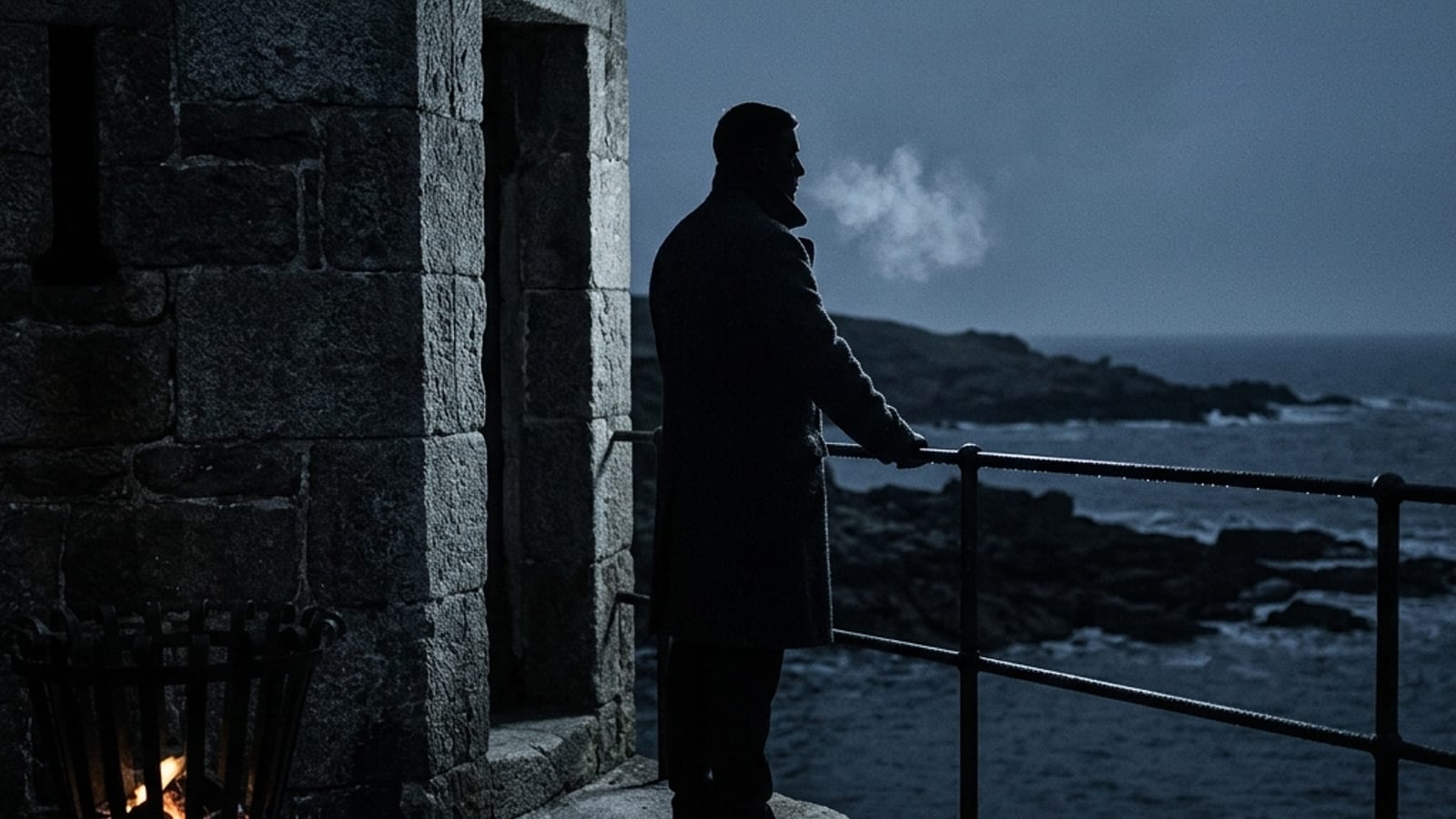
Seneca wrote an entire letter on this problem, and it's worth reading in full because it's not the anti-social rant it sounds like from a distance. He'd just come from a crowded arena and felt "more careless, more greedy, more cruel and inhuman" for having been surrounded by other people's worst impulses. His conclusion wasn't to hate people. It was to notice how porous he was — how much of what he felt was borrowed from whoever was nearest.
Retire into yourself as much as you can. Associate with those who will make a better man of you.
"Retire into yourself" is doing real work in that line. It's not retreat from life. It's a return to a baseline you can only find without an audience — the version of you that exists before anyone else's opinion, mood, or noise gets layered on top. Seneca treated solitude the way Musonius Rufus treated cold and hunger: as a controlled dose of the very thing that made him uncomfortable, practiced regularly enough that it stopped being a threat.
In a later letter, on the discipline of self-correction, Seneca described setting aside time specifically to examine himself without distraction — the ancient version of sitting with a journal and no phone. The goal wasn't to feel good. It was to see clearly, and he was blunt that you cannot see clearly while something or someone else is constantly talking.
This wasn't theoretical for the Stoics generally. Diogenes the Cynic was famous for choosing to live with almost no company and even less comfort, precisely so nothing external could hold power over him. The Stoics who came after him softened the extremity but kept the logic: if you never practice being alone and quiet, you never find out how much of your peace of mind was actually rented from other people.
Why it works: what the research shows
The Stoics didn't have EEGs or blood pressure cuffs, but some of what they described lines up with real, measurable findings.
It calms the body, not just the mind. A 2006 study published in Heart tested what happened when researchers inserted two-minute pauses of total silence between segments of music. The silence itself — not the music — produced the biggest drops in blood pressure and heart rate, outperforming even the most relaxing tracks tested. The absence of sound was doing more physiological work than any sound they could add.
It may support the brain, not just relax it. A 2015 study in Brain Structure and Functionexposed mice to daily periods of silence, white noise, pup calls, and ambient sound, and then looked at hippocampal neurogenesis — the growth of new cells in a brain region tied to memory and mood. Silence produced the strongest effect of any condition tested. It's a mouse study, so treat it as a lead, not a guarantee about your own brain, but it's a striking result from a design nobody expected to favor doing nothing.
It regulates emotion better than distraction does.Psychologists Thuy-vy Nguyen, Richard Ryan, and Edward Deci ran a series of experiments in 2018 asking people to spend short, chosen periods alone with no phone, no reading, no music — just sitting. Compared to people who kept busy, the solitude group reported lower high-arousal emotion, both the negative kind (anxiety, agitation) and, notably, the positive kind (excitement). Solitude didn't make people happier in the moment. It made them calmer, which is a different and, for this practice, more useful outcome.
Put together, the pattern is consistent with what Seneca claimed from experience alone: remove the input, and the nervous system stops reacting to things that were never actually happening to you.
The mistake: isolation dressed as solitude
There's a trap here, and it's the same shape as the mistake people make with cold showers and fasting: assuming more is automatically better. With silence and solitude, more can quietly turn into something else entirely — avoidance wearing a Stoic costume.
Solitude that's chosen, time-bound, and used to think clearly is training. Isolation that drifts on indefinitely, that you didn't really choose, and that leaves you flatter and more disconnected rather than steadier, is a different thing wearing the same clothes. One is a tool you pick up and put down. The other picks you up and doesn't let go.
Solitude
- Has a set start and end
- You chose it, and you can leave it
- Leaves you clearer or calmer afterward
- Coexists with a full, connected life
- Followed by wanting to see people again
Isolation
- Has no real end point
- Feels like it happened to you
- Leaves you flatter, more withdrawn
- Replaces connection instead of balancing it
- Followed by dread of re-engaging
If you notice the right-hand column creeping in — if being alone stops feeling chosen and starts feeling like the only option you can tolerate — that's not a deeper level of the practice. That's a signal to talk to someone, not a milestone to push through alone.
Finding your edge with silence
The same rule that governs cold water and hard beds governs this: aim for the edge of what's comfortable now, not the most extreme version available. A ten-day silent retreat sounds impressive, but for most people it's the panic zone — too much, too soon, abandoned after one attempt and never tried again.
The useful version is smaller and stranger than people expect. It's the walk with no headphones when you'd normally play a podcast. It's the drive with the radio off. It's sitting with your coffee for five extra minutes instead of reaching for your phone the second you sit down. None of that photographs well, which is exactly why the internet skips past it in favor of silent retreats and digital detoxes. The unremarkable version is the one you'll actually keep doing.
How to start this week
- Pick one daily window.Ten to fifteen minutes. A morning coffee, a walk, a commute. Attach it to something you already do so it doesn't need extra willpower to remember.
- Remove every input. No podcast, no music, no scrolling, no talking. Just the walk, or just the coffee, or just the chair.
- Let the discomfort happen without fixing it.The urge to check your phone or fill the quiet is the whole point. Notice it. Don't act on it. That's the rep.
- Keep a rough log.Even one line — "restless for the first three minutes, then settled" — turns an abstract feeling into evidence you're actually changing.
- Extend slowly, not heroically. Add five minutes every week or two, not thirty minutes all at once. The goal is a habit measured in months, not a single dramatic session.
Pair this with a broader look at how voluntary discomfort works if you want the full framework this practice sits inside — silence is one lever among several, and the same principles of edge-finding and proportion apply to all of them. If cold water is more your entry point, the cold exposure guide covers the same territory with a different tool.
Who should be careful
Silence and solitude are among the gentlest of the Stoic practices in this series — no cold water, no missed meals — but that doesn't make them risk-free for everyone.
- If you live with depression, anxiety, or a history of rumination spirals,unstructured silence can sometimes feed the loop rather than quiet it. Start shorter than you think you need to, and if it consistently makes things worse rather than calmer, that's useful information to bring to a therapist, not a reason to force through it alone.
- If you're already isolated,more deliberate alone time is the wrong prescription. The practice is for people whose lives are full of noise and company; it's not a substitute for connection you're missing.
- If solitude starts feeling compulsory, like something you owe rather than something you chose, stop and reconnect it to a reason, or set it down for a while. The Stoic aim was always freedom, including freedom from the practice itself.
Seneca didn't retreat from the world because he hated it. He retreated because he wanted to meet it clear-headed instead of borrowed and worn thin by everyone else's noise. Ten quiet minutes a day won't make you a Stoic sage. But it will show you, reliably, which of your thoughts and feelings are actually yours — and that turns out to be most of the practice.
Sources
- [1]Seneca, Letters to Lucilius, Letter 7 ("On Crowds") — Seneca on why mixing with crowds erodes character and why he withdraws into himself.
- [2]Seneca, Letters to Lucilius, Letter 25 ("On Reformation") — Seneca on retreating from company to test and correct oneself.
- [3]Bernardi et al. (2006), "Dynamic interactions between musical, cardiovascular, and cerebral rhythms in humans", Heart — Found that two-minute pauses of silence between music were more relaxing than the music itself, lowering blood pressure and heart rate.
- [4]Kirste et al. (2015), "Is silence golden? Effects of auditory stimuli and their absence on adult hippocampal neurogenesis", Brain Structure and Function — Mouse study; daily silence exposure was linked to more new cell growth in the hippocampus than noise or ambient sound.
- [5]Nguyen, Ryan & Deci (2018), "Solitude as an Approach to Affective Self-Regulation", Personality and Social Psychology Bulletin — Experimental studies finding that chosen time alone reduced high-arousal emotion, both positive and negative, and increased calm.
Make it daily
Keep the streak where you'll see it
Reading about discomfort changes nothing. Doing one hard thing a day, every day, is what rebuilds self-trust. StoicNow puts your challenge and your streak on your lock screen — so you can't quietly skip it.
Founding members get 3 months of Premium free. Launching 2026.
Questions people actually ask
What are the benefits of silence and solitude?+
The main benefits are a calmer nervous system, less reactive emotion, and a clearer sense of your own thoughts separate from other people's noise. Research links silence to lower blood pressure and heart rate, and controlled solitude to better mood regulation. Stoics used it to rehearse being fine without external approval or stimulation.
Is solitude the same thing as loneliness?+
No. Loneliness is an unwanted lack of connection that you didn't choose and that leaves you worse off. Solitude is chosen time alone that you can end whenever you want, used on purpose. The difference is agency and duration, not the number of people in the room.
How much silence or solitude should a beginner practice?+
Start with 10 to 15 minutes a day of no phone, no music, no talking — a walk, a coffee, or just sitting. That's enough to feel the discomfort of your own head without it turning into dread. Build up from there rather than jumping straight to a silent retreat.
Why does silence feel so uncomfortable at first?+
Most people rarely sit without input, so the brain treats the sudden absence of stimulation as a gap it needs to fill, often with anxious or repetitive thoughts. That discomfort is not a sign you're doing it wrong; it's the exact reaction the practice is designed to work through.
Can silence and solitude actually change your brain?+
There's early evidence for it. A 2015 mouse study found that daily periods of silence were linked to more new cell growth in the hippocampus, a region tied to memory, more than either noise or ambient sound. It's animal research, so treat it as suggestive, not proof of the same effect in humans.
Written by
Marcus HaleWriter & Stoic-practice researcher
“I'm not a doctor or a psychologist. I'm someone who has practiced this daily for years and reads the Stoics closely. Where health is involved, I cite the research and tell you to talk to a professional.”
Keep reading
The field notes
One honest practice, most weeks
No hype, no streak-shaming. Occasional letters on doing voluntary discomfort without wrecking yourself.