Recovery, deliberately
Contrast Therapy: The Stoic Case for Alternating Sauna and Ice Bath
A man steps out of a sauna at 190°F, skin flushed, lungs full of dry heat, and walks straight into a barrel of ice water. He doesn't ease in. He doesn't hover at the edge negotiating with himself. He steps down, sits, and breathes through it for ninety seconds before climbing out to do the whole thing again. This isn't a stunt. In Finland it's Tuesday.
Contrast therapy — swinging the body between real heat and real cold, on purpose, back and forth — is one of the oldest recovery practices on record and one of the more interesting ones to look at through a Stoic lens. It isn't just about sore legs. It's a compressed, repeatable rehearsal of losing comfort and getting it back, which is exactly the kind of training Musonius Rufus had in mind when he said the body should be accustomed to both cold and heat.
This is the straight version: what contrast therapy is, why the swing does anything at all, what the research actually supports (and where it doesn't), the mistake that turns a good protocol into a wasted one, and a way to start that won't put you in the emergency room.
What contrast therapy actually is
Contrast therapy means alternating between hot exposure and cold exposure in the same session, usually several times, always finishing on one end or the other depending on your goal. The classic version is sauna or hot tub followed by an ice bath or cold plunge, repeated for three or four rounds. The home version is a hot shower finished with a cold blast. Both use the same lever: heat opens the blood vessels near your skin, cold slams them shut, and your body has to keep adjusting.
It is not the same thing as a single cold shower or a single sauna session. The alternation is the entire point. A body that only ever gets cold, or only ever gets hot, adapts to one direction. A body that gets whipped between both, over and over, has to keep re-regulating — and that repeated re-regulation is where both the physical and mental effects come from.
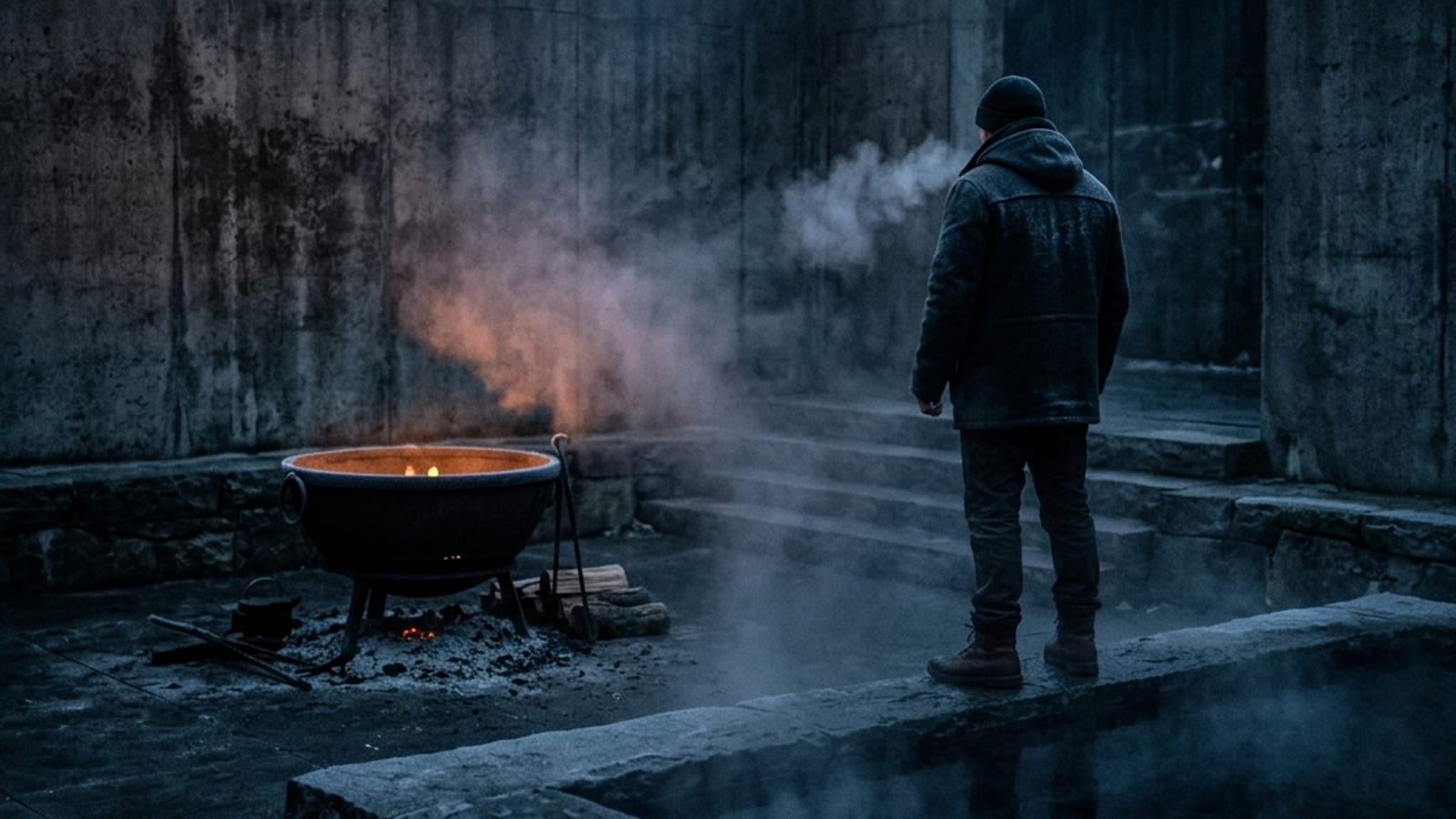
The old bathhouse habit hiding in plain sight
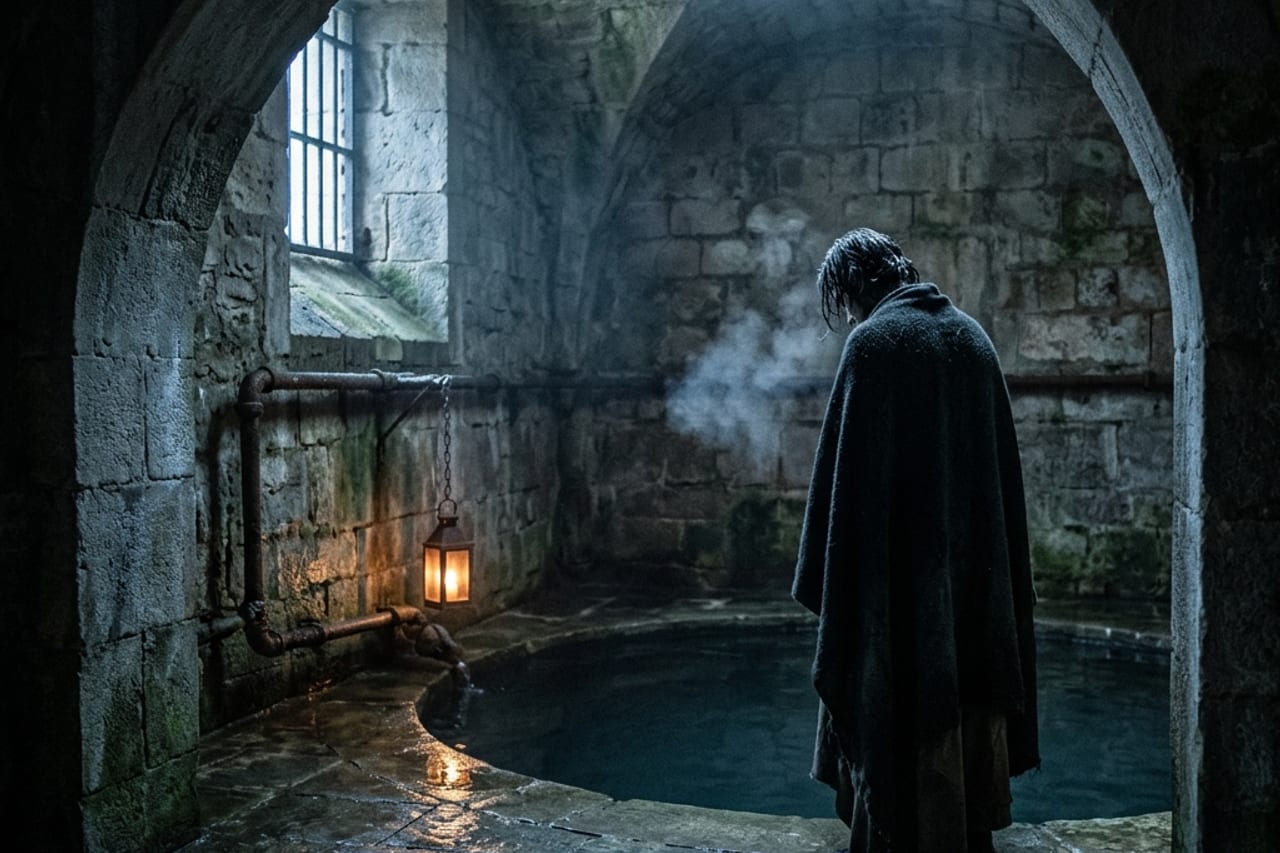
Long before anyone called it "contrast therapy," Roman bathhouses were built around exactly this sequence. A Roman moving through the baths passed from the tepidarium (warm room) to the caldarium (hot room, often with steam and hot water) and then, deliberately, into the frigidarium — a cold plunge pool meant to close the session. The architecture itself encoded the swing: get hot, then get cold, on purpose, as a matter of daily routine rather than novelty.
The Stoics who used the baths inherited that structure but treated the cold plunge as more than hygiene. Musonius Rufus, who taught Epictetus, argued that because a person is body and soul together, both need training, and he named cold and heat specifically as the tools:
We ought to accustom ourselves to cold and heat, to thirst and hunger, to scarcity of food, hardness of bed, and abstaining from pleasures — for these things make the body strong and the soul capable of courage.
Read that as a design brief and contrast therapy falls right out of it. Heat and cold aren't opposite hobbies. They're the same tool used in two directions, and the old bathhouses had already figured out that using both, back to back, was the point.
Why the swing works
It trains vascular flexibility. Heat pulls blood toward the skin to shed warmth; cold pulls it back toward the core to protect it. Doing this several times in a row is a workout for the blood vessels themselves — a repeated open-and-close that some researchers believe improves circulation over time, though the long-term evidence is still thinner than the popular claims suggest.
It manages soreness better than either extreme alone.A systematic review of contrast water therapy after exercise found it reduced people's perceived muscle soreness more consistently than it improved objective strength or power output — in plain terms, you feel noticeably better faster, even if a strength test the next day doesn't always show a dramatic edge over rest or a plain cold bath.
It forces your nervous system to practice resetting.This is the part that maps straight onto the Stoic goal. Each transition — hot to cold, cold to hot — spikes your heart rate and breath, and each time you have to bring yourself back to steady on purpose. Do that four times in one session and you've rehearsed "losing your footing and getting it back" four times before you've even had breakfast.
Sauna use on its own carries real cardiovascular data.A large Finnish cohort study found that men who used a sauna four to seven times a week had substantially lower rates of fatal cardiovascular events and all-cause mortality than men who used one once a week, with the benefit scaling with frequency and duration. That study is about sauna use generally, not contrast therapy specifically, but it's the strongest single piece of evidence for the "heat" half of the practice, and it's a large part of why the swing is worth building a habit around rather than trying once and moving on.
What the evidence actually shows
This is worth being honest about, because contrast therapy gets oversold constantly. The research splits cleanly into two piles.
On perceived recovery — how sore, tired, or wrecked you feel — the evidence leans genuinely positive. Multiple reviews of contrast water therapy after hard exercise report meaningfully lower perceived soreness in the days following, compared with passive rest.
On hard performance markers — how much weight you can lift, how fast you can sprint, 24 or 48 hours later — the picture is much messier. Some reviews find contrast water therapy modestly outperforms rest or plain cold-water immersion; others find no clear advantage over a cold bath alone once you control for the cold exposure itself. The honest summary: the cold half of contrast therapy is doing real, evidenced work; whether adding the heat half on top meaningfully improves objective recovery beyond what cold alone would do is still an open question.
The mistake almost everyone makes
People treat contrast therapy as a temperature contest — hotter sauna, colder plunge, more rounds, forever chasing a bigger number. That's backwards. The training effect comes from the transition, not the extremity of either end. A session with a merely warm shower and a merely cool finish, done consistently, teaches your nervous system the same lesson as an elite ice bath — just at a gentler amplitude.
The giveaway that you've overshot is simple: if you find yourself dreading the plunge hours before you get to it, or if you leave the cold water shaking and unable to catch your breath for several minutes, you've pushed past training and into something closer to an ordeal. That's not a badge of honor. It's a sign to back off the temperature or the duration, not a sign to push harder next time.
The Stoics were never chasing the most extreme version of a hardship. Seneca deliberately chose scantiest fare and coarse dress for his practice periods — not the most extreme deprivation available to a wealthy Roman, just enough to genuinely test the fear underneath it:
Set aside a certain number of days during which you shall be content with the scantiest and cheapest fare, with coarse and rough dress, saying to yourself the while: "Is this the condition that I feared?"
Ask the same question after your plunge. If the honest answer is "yes, and it was fine," the dose was right. If the answer is "I don't know, I was just trying to survive it," turn the dial down.
A protocol that won't wreck you
Here is a starting structure that matches what the research actually supports, without demanding a private sauna.
- Heat first, 8–10 minutes.A sauna if you have access, a hot bath or a very hot shower if you don't. You should be sweating and warm through, not lightheaded.
- Cold second, 1–3 minutes. An ice bath, a cold plunge, or a cold shower finish. Start at the shorter end. The goal in week one is completing it calmly, not maximizing the time.
- Repeat 2–4 rounds, always ending cold.Ending on cold is standard practice for the vascular-tightening effect; ending on heat is sometimes used instead if the goal is pure relaxation before sleep, but it changes what you're training for.
- Rest 30–60 seconds between transitions.Don't rush straight from one extreme into the next. Let your breathing settle before you move.
- Track how you feel the next morning, not just today.The real signal is whether soreness and stiffness are lower than they'd otherwise be, and whether you actually want to do it again — dread is the tell that you overshot.
If you don't have sauna access at all, don't treat that as a reason to skip the practice. A long hot shower followed by 30–90 seconds of cold reproduces the identical mechanism at a smaller amplitude, and it's the right place for almost everyone to start regardless of what equipment they eventually get to.
Training vs. punishment
Contrast therapy has a specific way of tipping into punishment: chasing colder water and hotter rooms as an end in itself, turning a recovery tool into a competition with yourself or with people online. The line is the same one that governs every voluntary-discomfort practice.
Training
- Ends when the protocol ends, not when you're depleted
- Leaves you calmer and looser afterward
- The temperature is a means, not the scoreboard
- You can stop mid-session without it meaning anything
- You sleep fine that night
Punishment
- Always needs one more round, one more degree
- Leaves you shaky, wired, or dreading the next session
- Colder and hotter become the whole point
- Stopping early feels like failure
- You're doing it for an audience, even an imagined one
The practice is meant to make you steadier, not more extreme. If you notice the right-hand column creeping in, the fix is smaller doses and a clearer reason, not more willpower.
Who should be careful
The swing that makes contrast therapy work is also exactly what makes it risky for some people. A few honest cautions before you build a habit around it.
- Heart conditions and blood pressure issues. Both the hot and cold ends independently spike heart rate and blood pressure, and the rapid alternation asks more of your cardiovascular system than either alone. Anyone with heart disease, arrhythmia, or uncontrolled high blood pressure should get medical clearance before trying this, not just before the cold half.
- Fainting or dizziness history.The sudden vessel dilation from heat followed by sudden constriction from cold can trigger lightheadedness in people prone to it. Sit down, don't stand, for at least the first several sessions.
- Pregnancy. Sauna heat and prolonged high core temperature carry specific pregnancy cautions independent of anything about cold — talk to your doctor before either half.
- Never alone in deep cold water.Cold shock can impair coordination and judgment faster than people expect. If you're using an ice bath rather than a cold shower, don't do your first sessions unsupervised.
Strip away the sauna aesthetics and the ice-bath photos, and contrast therapy is a very old idea in new packaging: get uncomfortable on purpose, come back to steady on purpose, and repeat it enough times that steady becomes the thing you can count on. The Romans built it into their architecture. The Stoics built it into their philosophy. You can build it into a Tuesday.
Sources
- [1]Musonius Rufus (Internet Encyclopedia of Philosophy) — Overview of his teaching that training the body to bear cold and heat trains the soul for endurance and self-control.
- [2]Seneca, Letters to Lucilius, Letter 18 ('On Festivals and Fasting') — Seneca's account of deliberately choosing harder conditions to rehearse hardship on his own terms.
- [3]Versey, Halson & Dawson (2013), 'Contrast Water Therapy and Recovery From Sport: A Systematic Review', Sports Medicine — Systematic review of contrast water therapy's effect on recovery markers after exercise.
- [4]Bieuzen, Bleakley & Costello (2013), 'Contrast Water Therapy and Exercise Induced Muscle Damage: A Systematic Review and Meta-Analysis', PLOS ONE — Meta-analysis finding contrast water therapy reduced perceived soreness more consistently than it improved objective strength recovery.
- [5]Laukkanen, Khan, Zaccardi & Laukkanen (2015), 'Association Between Sauna Bathing and Fatal Cardiovascular and All-Cause Mortality Events', JAMA Internal Medicine — Large Finnish cohort study linking frequent sauna use to lower cardiovascular and all-cause mortality.
Make it daily
Keep the streak where you'll see it
Reading about discomfort changes nothing. Doing one hard thing a day, every day, is what rebuilds self-trust. StoicNow puts your challenge and your streak on your lock screen — so you can't quietly skip it.
Founding members get 3 months of Premium free. Launching 2026.
Questions people actually ask
What is contrast therapy?+
Contrast therapy is alternating hot and cold exposure — most commonly a sauna or hot bath followed by an ice bath or cold shower, repeated for several rounds. The heat dilates blood vessels and the cold constricts them, and that repeated swing is the entire mechanism. It is used both for muscle recovery and, in the Stoic reading, as a deliberate training of the nervous system.
Does contrast therapy actually work, or is it hype?+
For perceived recovery and soreness, yes — the evidence is decent. For hard performance markers like next-day strength, the data is mixed, with some systematic reviews finding contrast water therapy modestly better than rest and others finding no clear edge over a plain cold bath alone. Treat it as a good bet with a real mental benefit, not a guaranteed physiological one.
How long should each round of contrast therapy be?+
A common, well-tolerated pattern is 5–10 minutes of heat, then 1–3 minutes of cold, repeated for 3–4 rounds, always ending on cold. Beginners should start with a single round at the shorter end and add rounds only once the cold plunge stops feeling frightening.
Can I do contrast therapy at home without a sauna?+
Yes. A hot shower run as hot as is comfortable for several minutes, followed by 30–90 seconds of cold at the end, reproduces the same swing at a smaller scale. It won't match a true sauna-to-ice-bath session, but it uses the identical mechanism and is where almost everyone should start anyway.
Is contrast therapy safe for everyone?+
No. The rapid swings in blood pressure and heart rate can be risky for anyone with cardiovascular disease, uncontrolled high blood pressure, or a history of fainting, and cold immersion carries its own separate cautions. Check with a doctor first if any of that applies to you.
Written by
Marcus HaleWriter & Stoic-practice researcher
“I'm not a doctor or a psychologist. I'm someone who has practiced this daily for years and reads the Stoics closely. Where health is involved, I cite the research and tell you to talk to a professional.”
Keep reading
The field notes
One honest practice, most weeks
No hype, no streak-shaming. Occasional letters on doing voluntary discomfort without wrecking yourself.