Cold exposure
Best Time of Day for Cold Exposure: Morning, Evening, or Whenever You Can
A guy on r/coldshowers asked a simple question that gets buried in every cold-exposure thread: "Does it actually matter when I do this, or am I overthinking a shower?" The honest answer is both. Cold water doesn't care what time your clock says. Your nervous system does.
Cold exposure isn't a switch you flip in a vacuum. It lands on top of a body that already has its own daily rhythm — rising and falling cortisol, a core temperature that climbs through the day and drops at night, an alertness system that's either winding up or winding down depending on the hour. Time it well and the cold works with that rhythm. Time it badly and you're fighting your own biology for no real reason.
The quick answer
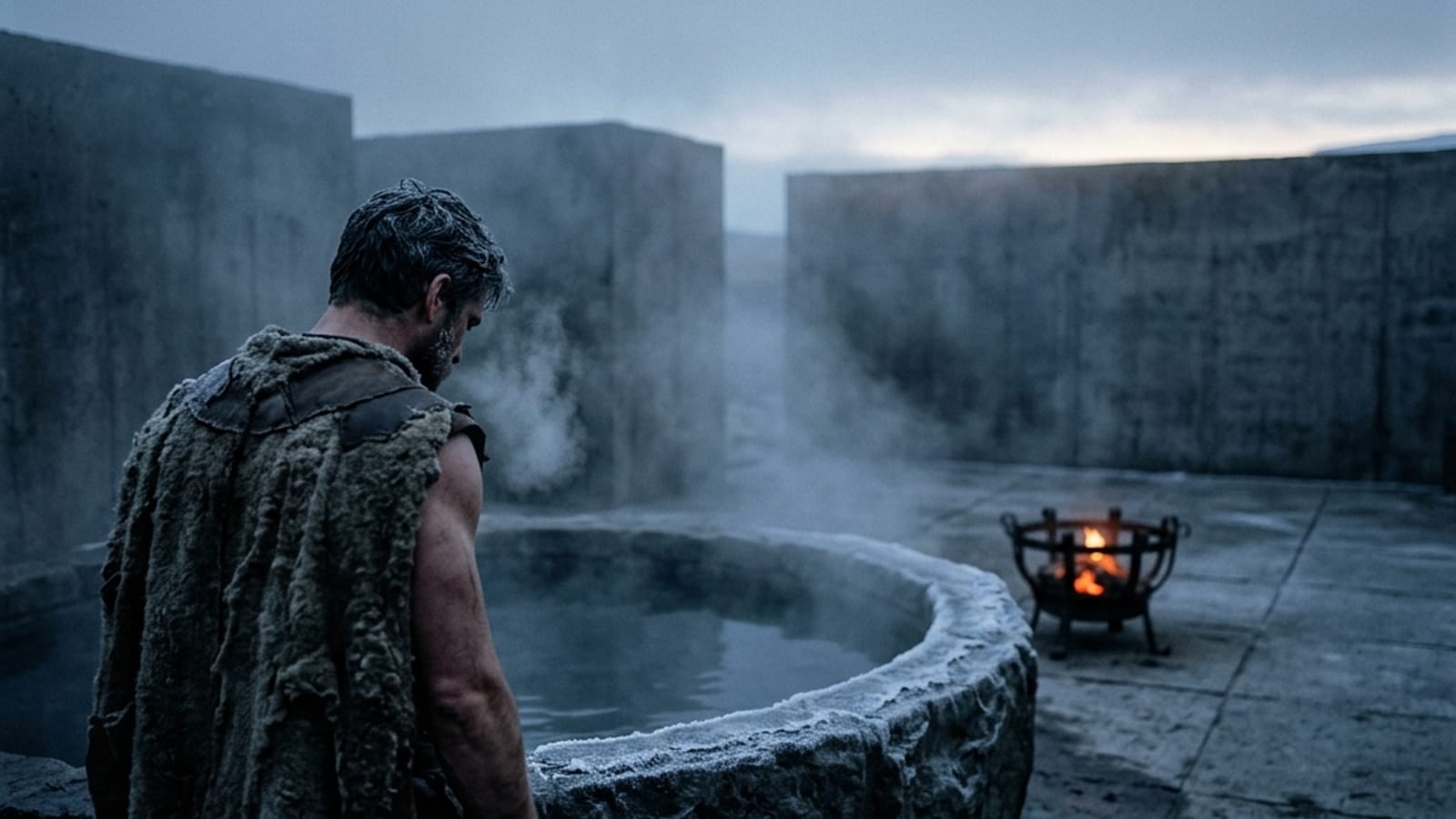
The best time of day for cold exposure, for most people, is morning. Do it within the first two hours after waking and you're stacking the cold's alerting effect on top of the cortisol awakening response — the natural cortisol spike your body already produces in the first 30 to 45 minutes after you open your eyes. The cold amplifies a signal your body was going to send anyway.
Evening isn't off-limits, but it's a narrower window. The same alerting effect that helps you at 7 AM can work against you at 10 PM if it's close enough to bedtime to interfere with falling asleep. The fix isn't "never train at night." It's "leave a real gap before bed if you do."
None of this means an afternoon cold shower is wasted. If morning or a properly buffered evening isn't realistic for your schedule, a midday or afternoon session still delivers almost everything the practice is for. Timing is an optimization, not a prerequisite.
Why timing matters at all
Two systems in your body run on a clock, and cold exposure interacts with both of them directly.
The first is your hormonal rhythm. Cortisol, the hormone most associated with alertness and stress response, isn't flat across the day. It spikes sharply in the half hour or so after you wake up — a well-documented phenomenon called the cortisol awakening response — then gradually tapers as the day goes on, reaching its lowest point around bedtime. Cold water immersion independently triggers a jolt of stress hormones, including norepinephrine. Do that jolt during the natural morning spike and it reads as "wake up, get moving." Do it during the natural evening decline and it reads as "why is my body doing this right before I need to sleep."
The second is your core body temperature rhythm. Your internal temperature isn't constant either — it's lowest in the early morning, climbs through the day, peaks in the early evening, then falls again as you approach sleep. Falling asleep is partly triggered by that drop. Introducing a cold stimulus right when your body is trying to lower its temperature for sleep adds a confusing signal on top of a process that's already in motion.
The case for morning
Morning cold exposure has three things going for it that no other time slot has all at once.
It compounds with a signal your body is already sending.The cortisol awakening response is already pushing you toward alert, engaged, and ready to move. Cold on top of that doesn't fight your biology, it rides it. That's a large part of why people describe morning cold exposure as an energy multiplier rather than just a shock.
It has nowhere bad to go.Whatever alertness or restlessness the cold stirs up has an entire day to dissipate before you need to sleep. There's no clock pressure, no wondering whether tonight is the night it keeps you staring at the ceiling.
It sets the tone before the day gives you an excuse not to.This one isn't physiology, it's logistics. A morning cold shower gets done before your schedule fills up, your motivation dips, or you talk yourself out of it at 9 PM after a long day. That consistency matters more for the training effect than any hormonal edge.
I do it right after I wake up because it's the one thing in my day that's guaranteed to happen before life gets in the way.
The case for evening
Evening cold exposure isn't a mistake — it just needs one condition attached: distance from bedtime. With that condition met, evening has real advantages of its own.
It fits real schedules. Not everyone controls their morning. Shift workers, parents of small children, and anyone with an early commute may simply not have a spare five minutes before 8 AM. A practice you skip because the ideal window is unavailable is worth less than an imperfectly timed practice you actually do.
It can serve as a reset after a hard day. Several people describe evening cold exposure less as an energizer and more as a circuit breaker — a hard, immediate sensation that cuts through rumination after work, similar to how Marcus Aurelius used physical discomfort to snap his attention back to the present rather than the noise in his head.
It pairs naturally with evening training. If your workout window is after work, cold exposure right after cardio or conditioning work is a reasonable slot — just give resistance training a few hours of separation first, since cold immersion immediately after strength work may blunt part of the muscle-building signal.
The rule that makes evening work: finish at least one to two hours before you want to fall asleep. That's enough time for the initial alertness spike to fade before your body needs to start winding down.
What the research actually says
It's worth being precise here, because a lot of cold-exposure advice online overstates what the research directly shows. There isn't a large body of trials that put cold-water immersion at 7 AM against 7 PM and measured outcomes head-to-head. What exists is a set of well-established facts about the surrounding biology, and the timing advice is a reasonable inference from those facts, not a settled conclusion.
What's well established: the cortisol awakening response is real and well documented — cortisol does spike in the 30 to 45 minutes after waking. Core body temperature does follow a predictable daily rhythm, lowest before dawn and falling again before sleep. Cold water immersion does trigger a measurable spike in norepinephrine and other stress hormones, independent of the time of day it's done. And the thermophysiological cascade that helps trigger sleep onset does depend on a drop in core temperature — a process a stress-hormone spike could plausibly interfere with.
What's inference, not proof: that stacking cold exposure on the morning cortisol spike measurably improves outcomes versus doing it later, or that evening cold exposure reliably harms sleep for the average person. Both are reasonable extrapolations from real physiology. Neither is a closed case.
Finding your own window
Rather than defaulting to a rule, run a two-week test on yourself. It costs nothing but attention.
Morning (first 2 hours awake)
- Rides the natural cortisol spike
- No sleep-interference risk
- Gets done before the day derails it
- Best default if you have any control over your schedule
Evening (2+ hours before bed)
- Fits schedules with no morning window
- Useful as a reset after a hard day
- Needs a real buffer before sleep
- Requires you to actually check your own sleep quality
Track two things every day: how you feel in the two hours after the cold, and how you sleep that night (time to fall asleep, number of wake-ups, how rested you feel). After two weeks you'll have your own answer, and it'll matter more than any general guideline — including this one.
How to time it this week
- Default to morning if you can. Fit it in within two hours of waking — right after your normal shower is the easiest anchor point.
- If mornings aren't possible, pick a fixed evening slot at least two hours before your target bedtime, and treat that gap as non-negotiable.
- Separate it from heavy lifting by a few hours if muscle growth is a training goal; timing matters less if your training is conditioning-focused.
- Keep the dose modest while you're testing timing.This isn't the week to also push duration or temperature — isolate one variable so your sleep data actually means something. The beginner starting guide has a sane ramp if you're new to this.
- Write down how you slept. Not a wearable-grade log, just a one-line note each morning. Two weeks of notes beats any general rule about timing, including this one.
If none of this feels conclusive, that's honest. The underlying mechanism — a hormetic stress your body adapts to — doesn't disappear because you did it at the "wrong" hour. Timing is a lever you can pull to get a bit more out of the practice, not a condition for it to count at all.
Who should be careful about timing
Timing advice is a refinement for people already medically cleared for cold exposure. It doesn't replace the underlying safety screen.
- People with sleep disorders or chronic insomnia should be more cautious about evening sessions specifically, since the alerting effect is the exact mechanism most likely to make an existing sleep problem worse.
- Shift workerswhose "morning" falls at an unconventional clock hour should apply the same logic to their own wake time, not the calendar clock — the cortisol spike follows your personal wake-up, not sunrise.
- Anyone with a heart condition, high blood pressure, or Raynaud's should get medical clearance before cold immersion at any hour — the norepinephrine and heart-rate response is the same regardless of what time you do it.
Pick the slot you'll actually keep. Morning has the biology on its side, but the practice you skip because the timing wasn't perfect helps you less than the imperfectly timed one you finish.
Sources
- [1]Pruessner JC et al. (1997), 'Free cortisol levels after awakening: a reliable biological marker for the assessment of adrenocortical activity', Life Sciences — The original description of the cortisol awakening response — the natural cortisol spike in the first 30-45 minutes after waking.
- [2]Refinetti R, Menaker M (1992), 'The circadian rhythm of body temperature', Physiology & Behavior — Foundational review of how core body temperature rises and falls on a 24-hour cycle.
- [3]Kräuchi K, 'The thermophysiological cascade leading to sleep initiation in relation to phase of entrainment', Sleep Medicine Reviews — Explains how a falling core temperature helps trigger sleep onset — relevant to why late cold exposure can backfire.
- [4]Šrámek P et al. (2000), 'Human physiological responses to immersion into water of different temperatures', European Journal of Applied Physiology — Measured the norepinephrine and metabolic spike triggered by cold water immersion.
- [5]Huberman Lab Podcast (Andrew Huberman, Stanford School of Medicine) — Discusses deliberate cold exposure protocols, including timing relative to sleep and training.
Make it daily
Keep the streak where you'll see it
Reading about discomfort changes nothing. Doing one hard thing a day, every day, is what rebuilds self-trust. StoicNow puts your challenge and your streak on your lock screen — so you can't quietly skip it.
Founding members get 3 months of Premium free. Launching 2026.
Questions people actually ask
What is the best time of day for cold exposure?+
For most people, morning is the best time for cold exposure. It rides the natural rise in cortisol and alertness your body is already producing after waking, so the cold amplifies a wake-up signal you're already getting instead of fighting your body's wind-down toward sleep. Evening works too, just with more care and a bigger gap before bed.
Is it bad to do cold exposure at night?+
Not inherently bad, but riskier for sleep. Cold exposure spikes norepinephrine and alertness, and doing that within roughly one to two hours of bedtime can make it harder to fall asleep, especially if you're sensitive to stimulants or already sleep poorly. If night is your only option, finish at least two hours before you want to be asleep and watch how you actually sleep that night.
Does cold exposure work better in the morning for energy?+
Many people report a sharper, longer-lasting energy boost from morning cold exposure, likely because it compounds with the cortisol awakening response — the natural cortisol spike your body produces in the first 30 to 45 minutes after waking. Doing the same cold exposure at 3 PM, when cortisol is already declining, tends to feel like a jolt rather than a boost.
Can cold exposure before bed disrupt sleep?+
It can, for some people. Falling asleep depends partly on your core body temperature dropping; cold water immersion first spikes stress hormones and alertness before any cooling effect kicks in, which can work against that wind-down window. If you train in the evening, leave enough buffer time and track your own sleep before assuming it's a problem.
Should I do cold exposure before or after a workout?+
After, if the workout is for strength or muscle growth — cold immersion right after resistance training may blunt some of the adaptation signal your muscles are trying to send. If the workout is for endurance or general conditioning, timing matters less. When in doubt, separate cold exposure from lifting by a few hours.
Written by
Marcus HaleWriter & Stoic-practice researcher
“I'm not a doctor or a psychologist. I'm someone who has practiced this daily for years and reads the Stoics closely. Where health is involved, I cite the research and tell you to talk to a professional.”
Keep reading
The field notes
One honest practice, most weeks
No hype, no streak-shaming. Occasional letters on doing voluntary discomfort without wrecking yourself.