The evidence, checked
Cold Shower Benefits: What the Research Actually Shows (and What It Doesn't)
In 2016, a team of Dutch researchers put 3,018 people through a genuinely unglamorous experiment: end your normal warm shower with 30, 60, or 90 seconds of cold water, every day, for a month. No ice baths, no wind chill, no breathing theatrics. Just a cold tail on an ordinary shower. The people who did it called in sick 29% less often over the next month than the people who didn't. That single number is the closest thing cold showering has to a hard data point, and it is both more modest and more interesting than what the internet usually claims.
Cold shower benefits get sold two ways online: as a minor discomfort with no real payoff, or as a near-miracle for immunity, fat loss, and mental toughness. Neither is what the research says. This is the version built from the actual studies — what holds up, what's still a hypothesis, and what has no real evidence behind it at all.

What the research actually shows
Start with the strongest evidence: the 2016 trial published in PLOS ONEby Geert Buijze and colleagues. It randomized nearly 3,000 adults into a warm-shower control group and three cold-finish groups (30, 60, or 90 seconds of cold water after the normal shower), then tracked sick-day absence from work over the following month. All three cold groups reported roughly 29% fewer sick days than the control group. Notably, there was no significant difference between 30 seconds of cold and 90 — more wasn't better, it just cost more discomfort for the same result.
The catch, which the authors are upfront about: self-reported sick-day absence isn't the same as confirmed illness. People who'd just done something hard on purpose may have gone to work anyway out of stubbornness, not because they were less sick. It's a real, well-run trial, but it's one data point, not a settled fact.
The second solid finding is physiological, not behavioral. A 2000 study in the European Journal of Applied Physiologymeasured what actually happens in your bloodstream during cold water immersion: plasma norepinephrine rose roughly five-fold in cold water compared to neutral or warm water. Norepinephrine is the chemical behind the alertness and "switched-on" feeling people report after a cold shower — that part isn't folklore, it's measurable.
The mood effect
The norepinephrine spike from the Šrámek study explains why a cold shower feels like flipping a switch. Norepinephrine sharpens attention and mood in the short term, and that five-fold jump from cold immersion is well above what you get from moderate cooling. This is the mechanism most people are actually chasing when they say a cold shower "resets" them.
In 2008, researcher Nikolai Shevchuk went further and proposed, in a paper for Medical Hypotheses, that adapted cold showering could work as a treatment for depression — pointing to the norepinephrine release, a possible endorphin effect, and the density of cold receptors in the skin as plausible mechanisms. It's a genuinely interesting hypothesis paper.
It is also, importantly, a hypothesis paper. It proposes a mechanism and a rationale for testing cold showers as a depression treatment; it does not report a clinical trial in depressed patients with outcome measures. That distinction gets lost constantly online, where the paper is cited as if it already proved cold showers treat depression. Treat this one as a plausible, unproven mechanism worth further study — not a diagnosis-grade intervention.
It doesn't fix my brain. It just gives me thirty seconds where there's nothing to think about except the water, and somehow that's enough to reset the morning.
That's a fair description of what the mechanism can plausibly deliver: an acute mood lift and a moment of forced, total attention. It's not nothing, and it isn't a cure.
The immune claim
"Cold showers boost your immune system" is the single most repeated claim about this habit, and it deserves the most scrutiny. The study people usually mean, even if they don't know it, is the 2014 PNAS paper by Matthijs Kox and colleagues on practitioners of the Wim Hof Method — a combination of cold exposure and a specific breathing protocol.
In that study, trained subjects were injected with a bacterial endotoxin under medical supervision. Compared to untrained controls, the trained group showed higher circulating epinephrine and a measurably reduced release of pro-inflammatory cytokines — meaning they could, to a real degree, voluntarily dial down their body's inflammatory response. That's a striking result, and it made headlines for good reason.
But read the method again: this was cold exposure combined witha trained breathing technique, in a small group of practiced participants, tested against an injected toxin in a lab — not a cold shower on an ordinary Tuesday tested against a common cold. Extrapolating from "can dampen an inflammatory response to endotoxin under lab conditions" to "cold showers boost your immune system" is a much bigger leap than the study supports.
What the evidence doesn't support
It's worth naming the claims that circulate constantly but don't trace back to real data:
Reasonably supported
- A short-term alertness and mood lift (norepinephrine)
- Fewer self-reported sick days in one large RCT
- Trainable modulation of the inflammatory response (with breathwork)
- A daily kept-promise effect on self-discipline
Not shown by the research
- Meaningful fat loss from brief cold showers
- "Detoxing" the body of anything
- A general, permanent immune system upgrade
- Clinical treatment of diagnosed depression or anxiety
None of this means cold showers are useless. It means the honest case for them is smaller and more specific than the claims that get shared. That's usually true of anything that actually works.
How much cold you actually need
The most commonly cited number in the whole literature is small: 30 to 90 seconds of cold water at the end of a shower, done daily, for 30 days — that's the exact protocol from the Buijze trial that produced the sick-day result. The study found no meaningful advantage to 90 seconds over 30, which matters because it means the marginal comfort cost of going longer doesn't appear to buy you anything extra.
The norepinephrine data points the same direction: the spike shows up from cold water immersion itself, not from extended duration. There is no study showing that five or ten minutes of cold delivers a proportionally bigger benefit than 60 seconds — and there is real risk (see below) that climbs the longer and colder you go.
If you want a number to actually anchor to, use the one from the trial: 30 to 90 seconds, cold enough that it's genuinely uncomfortable, tacked onto the end of a normal shower, daily. That is the studied dose, not a guess.

How to start without hating it
- Keep your normal shower.Wash and rinse warm as usual. Cold only goes at the very end — this isn't about an all-cold shower, and the trial that found benefits didn't use one.
- Start at 30 seconds.That's the low end of the studied range, and it's enough to trigger the norepinephrine response. You don't need to prove anything by going longer in week one.
- Breathe on purpose. The instinct is to gasp and tense up. Slow, controlled exhales through the first ten seconds make the rest of it manageable and are the one piece of technique worth borrowing from the Wim Hof protocol even without the rest of it.
- Do it daily for a real trial. One cold shower tells you nothing. Thirty days, same time each day, is what the research actually measured — give it that long before deciding if it does anything for you.
- Track it somewhere you'll see it.The habit dies quietly if there's no visible streak. If you want a structured version calibrated to your level, the Discomfort Challenge Generator will build you one.
For a broader look at what "training at your edge" actually means beyond just showers, see the biology behind why hard things help, and if you're trying to decide between a cold shower and a proper ice bath, the comparison is worth reading first.
Safety and who should be careful
Cold water immersion triggers what physiologists call the "cold shock response" — an involuntary gasp, a spike in heart rate, and a jump in blood pressure, all within the first seconds of exposure. That response is exactly the mechanism behind the norepinephrine surge, and it's also exactly why cold exposure isn't risk-free for everyone.
- Heart conditions or uncontrolled high blood pressure: the sudden cardiovascular spike is a real risk. Talk to a doctor before starting.
- Raynaud's or circulatory conditions: cold exposure can trigger a disproportionate vascular response. Get medical guidance first.
- Pregnancy: approach cold showers cautiously and check with your doctor given the cardiovascular changes involved.
- Never combine cold water immersion with breath-holding underwater or alone in open water — the same cold shock reflex has caused drowning deaths in cold-water swimming; this article is about a shower, not open-water immersion.
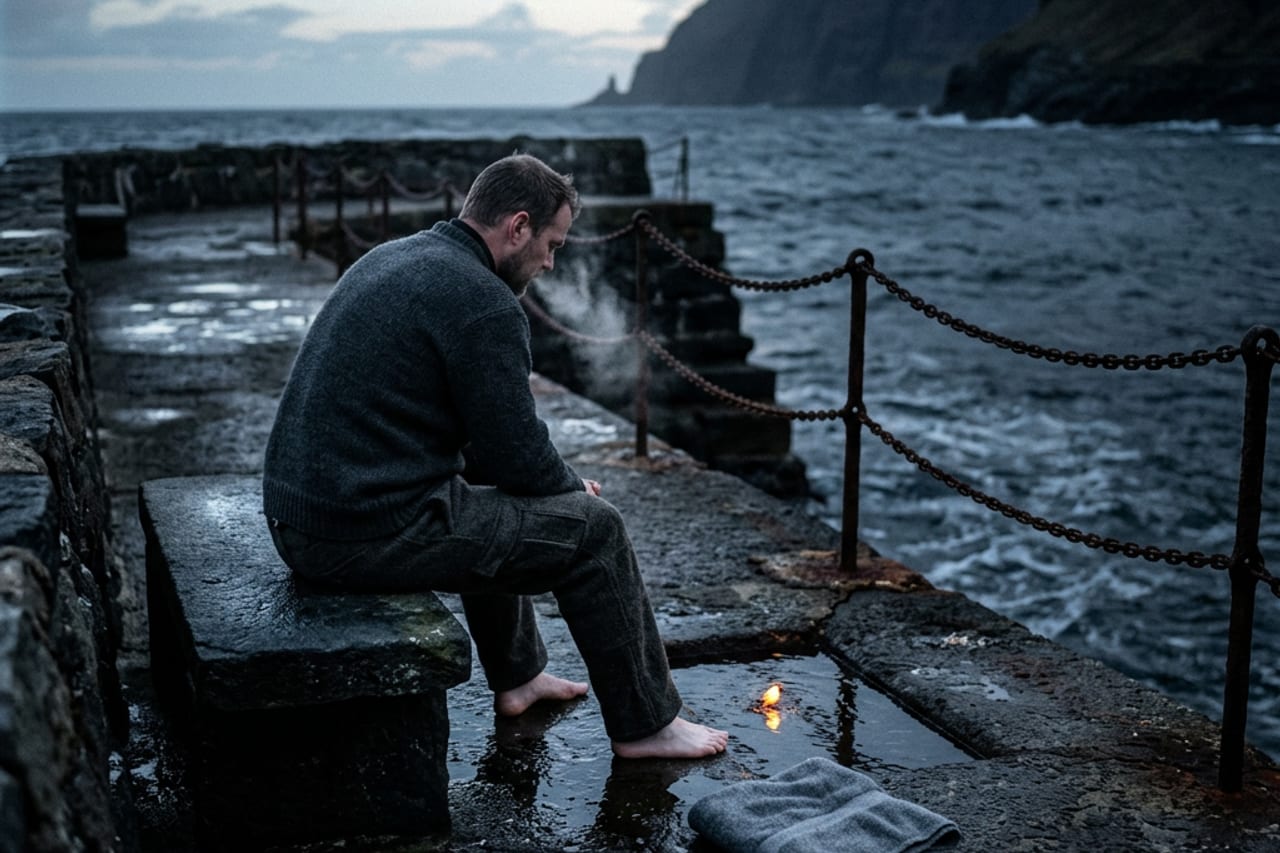
The honest version of cold shower benefits is smaller than the headlines and more useful because of it: a real, measurable norepinephrine spike, a plausible but unproven mood mechanism, one solid trial showing fewer sick days at a specific dose, and a genuinely interesting but narrower immune-modulation finding that required training and breathwork to produce. That's enough reason to try thirty seconds of cold water tomorrow morning. It isn't reason to expect it to fix your immune system, your mood disorder, or your waistline on its own.
Sources
- [1]Buijze GA, et al. (2016), 'The Effect of Cold Showering on Health and Work: A Randomized Controlled Trial', PLOS ONE — 3,018-person RCT; cold-shower groups reported ~29% fewer sick-day absences over 30 days, with no significant drop in illness incidence.
- [2]Šrámek P, et al. (2000), 'Human physiological responses to immersion into water of different temperatures', European Journal of Applied Physiology — Cold water immersion (14°C) raised plasma norepinephrine roughly five-fold, far more than moderate cooling.
- [3]Kox M, et al. (2014), 'Voluntary activation of the sympathetic nervous system and attenuation of the innate immune response in humans', PNAS — Trained subjects (cold exposure + breathing) showed higher epinephrine and a dampened inflammatory response to an injected endotoxin.
- [4]Shevchuk NA (2008), 'Adapted cold shower as a potential treatment for depression', Medical Hypotheses — A hypothesis paper proposing a mechanism (norepinephrine, endorphin release) — not a clinical trial for depression.
- [5]Seneca, Letters to Lucilius, Letter 18 — The Stoic framing for choosing discomfort on purpose, 'is this the condition that I feared?'
Make it daily
Keep the streak where you'll see it
Reading about discomfort changes nothing. Doing one hard thing a day, every day, is what rebuilds self-trust. StoicNow puts your challenge and your streak on your lock screen — so you can't quietly skip it.
Founding members get 3 months of Premium free. Launching 2026.
Questions people actually ask
What are the actual benefits of cold showers?+
The best-supported benefits are a sharp, short-term mood lift, a surge in norepinephrine that can leave you calmer and more alert, and — in one randomized trial — about 29% fewer sick-day absences from work. Claims about fat loss, detoxing, or a permanently 'boosted' immune system go well past what the research shows.
Do cold showers boost your immune system?+
Not exactly. A 2014 PNAS study found that people trained in cold exposure and breathing techniques could voluntarily blunt their inflammatory response to a bacterial toxin — that's immune modulation, not a general immunity boost. The sick-day data from the 2016 PLOS ONE trial is suggestive but doesn't prove fewer infections.
How long should a cold shower be to get benefits?+
The main trial that found real-world benefits used just 30 to 90 seconds of cold water at the end of a normal warm shower, for 30 days. Longer isn't shown to be better — the studied dose is short, and diminishing returns (plus injury risk) start well before you hit five minutes.
Can cold showers help with depression or anxiety?+
There's a plausible mechanism — cold water triggers a large norepinephrine release, and one hypothesis paper proposed adapted cold showering as a depression treatment — but this hasn't been tested in a proper clinical trial for depression. Treat it as a mood-lifting habit, not a substitute for treatment.
Are cold showers safe for everyone?+
No. Cold water immersion spikes heart rate and blood pressure through the 'cold shock' response, which is genuinely risky for people with heart conditions, uncontrolled high blood pressure, or Raynaud's, and it should be approached cautiously during pregnancy. Check with a doctor first if any of that applies to you.
Written by
Marcus HaleWriter & Stoic-practice researcher
“I'm not a doctor or a psychologist. I'm someone who has practiced this daily for years and reads the Stoics closely. Where health is involved, I cite the research and tell you to talk to a professional.”
Keep reading
The field notes
One honest practice, most weeks
No hype, no streak-shaming. Occasional letters on doing voluntary discomfort without wrecking yourself.