The modern ritual
The Comfort Crisis Misogi: The Modern Ritual for Choosing Real Hardship
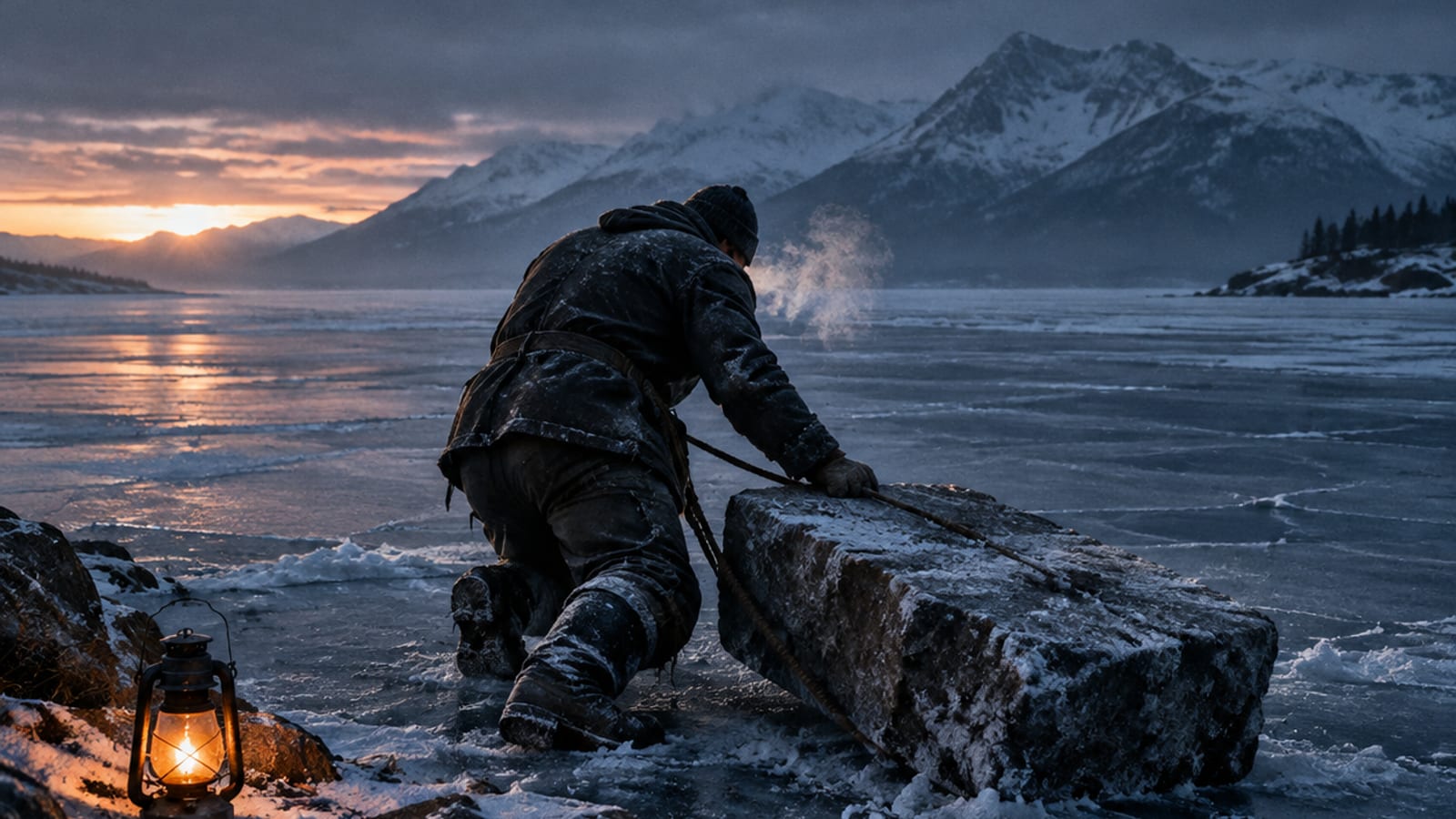
A man in his sixties carries a 60-pound section of elk antler across four miles of Alaskan tundra, alone, because a journalist named Michael Easter went looking for the hardest thing he could find and came back with a word for it: misogi. He wasn't hunting for a trophy. He was testing a theory — that a species built by 200,000 years of scarcity was quietly breaking down inside a century of ease.
That theory is the comfort crisis, and the ritual he built to answer it — the comfort crisis misogi — borrows a Japanese word for a cold-water purification rite and repurposes it as a single, brutal, once-a-year day of chosen hardship. Both ideas have spread fast because they name something a lot of people already feel: life has gotten easier and somehow worse at the same time.
What the comfort crisis actually is
Easter's argument, laid out across The Comfort Crisis, is not that comfort is bad. It's that we have removed almost every source of physical and mental friction from daily life — the walking, the hunger, the cold, the boredom, the effort of just getting food and shelter — and our bodies and minds never got the memo that the emergency is over. We evolved to handle scarcity. We now live in a near-total absence of it, and the mismatch shows up as anxiety, low resilience, and a strange, persistent restlessness that more convenience never seems to fix.
You don't need the book to notice the pattern. Grocery delivery instead of a walk to the store. Climate control instead of ever being cold or hot for more than a few minutes. A phone that removes every idle second where your mind used to have to sit with nothing. None of these are wrong choices individually. Stacked together, they add up to a life with almost no natural difficulty left in it — which means, if you want difficulty on purpose, you now have to go looking for it.
What misogi actually means
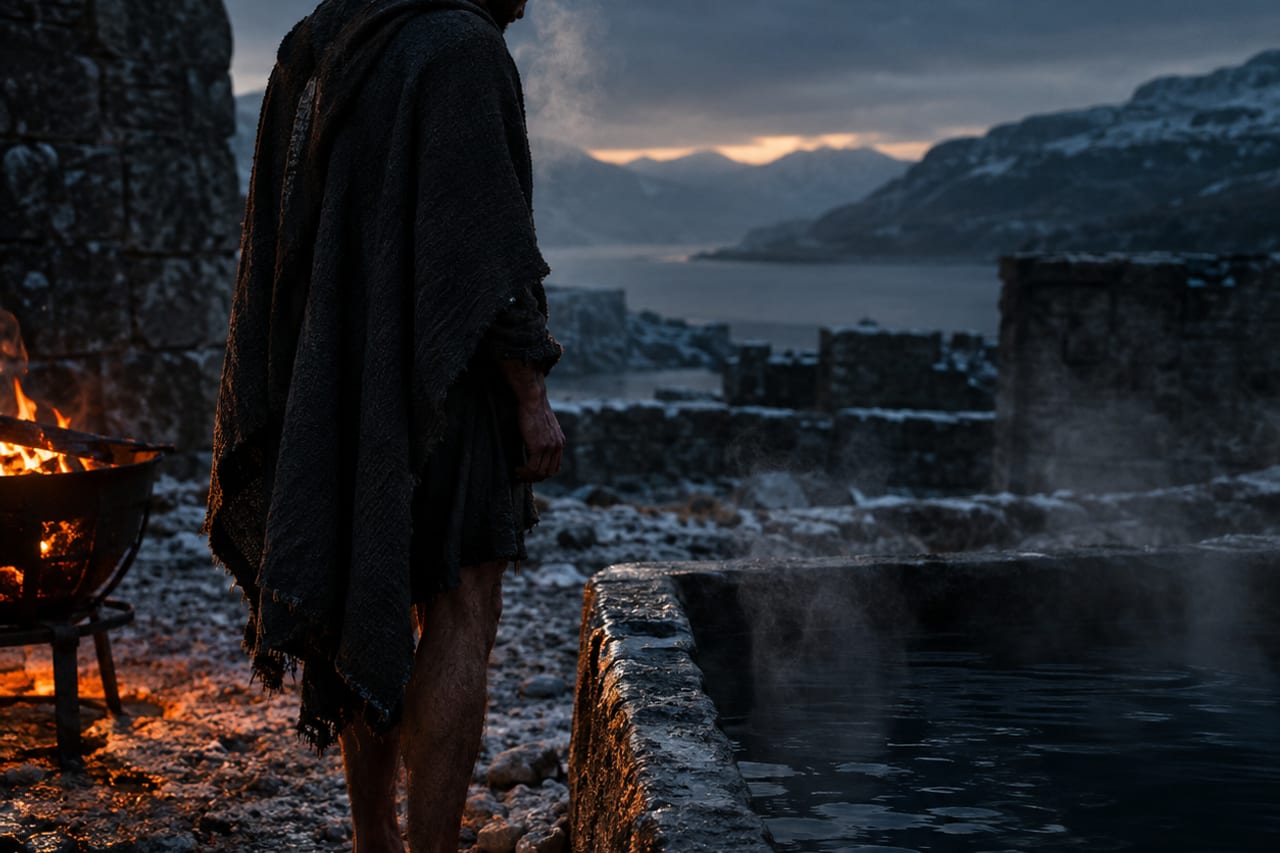
The original misogi is a Shinto purification ritual, older than the modern challenge by centuries. Practitioners stand beneath a freezing waterfall or wade into cold ocean water, often chanting, to wash away impurity before approaching a shrine. It is spiritual, communal, and tied to specific sites and traditions in Japan — it is not, in its traditional form, a solo fitness stunt.
Marcus Elliott, a Harvard-trained sports medicine physician who has worked with Olympic and professional athletes, borrowed the word for something narrower: a single, extremely difficult, self-directed physical challenge, done about once a year, chosen specifically because it sits near the edge of what you can actually finish. Easter met Elliott while researching his book, adopted the framework, and the secular version of the word has since traveled far past its origins — usually stripped of the ritual and religious context it came from, which is worth naming honestly rather than glossing over.
The modern misogi challenge
In its popularized form, a misogi is not a training block. It's a single day, sometimes a weekend, built around one enormous physical effort: a brutal hike with a heavy carry, a long solo paddle, a multi-hour climb, a cold-water crossing. The point isn't the specific activity. It's that the outcome is genuinely uncertain going in — you are not sure you'll finish, and that uncertainty is the entire mechanism.
Compare that to the daily voluntary-discomfort practice this site usually covers — a cold shower finish, a rucking walk, a fast, an hour without your phone. Those live in the discomfort zone we've written about elsewhere: hard but sustainable, repeated often, building steadiness over months. A misogi is a different animal entirely. It's rare, it's severe, and it's meant to leave a mark — a specific memory you can point back to later and say, I did that, I can do harder things than I think.
Misogi challenges make people better at handling the uncertain, hard things that happen in normal life, because they've practiced pushing through uncertain, hard things on purpose.
Why removing scarcity broke something
There's a real physiological thread underneath this, and it doesn't require taking the book on faith. Sports scientist Samuele Marcora's research on perceived effort found that people often stop a hard physical task well before their muscles are actually exhausted — the brain calls it quits based on how difficult the effort feels, not on a hard physical limit. That ceiling is trainable. Expose yourself to enough hard, uncertain effort, and the point where your brain says "stop" moves further out.
That's the actual mechanism behind a comfort crisis. If your hardest regular physical effort is carrying groceries up one flight of stairs, your brain's internal definition of "too hard" calibrates itself extremely low. Everything above that line starts to register as threat rather than effort. A misogi, done deliberately and rarely, is a blunt but effective way to reset that calibration — not because suffering is virtuous, but because the ceiling only moves when something actually pushes on it.
The rules of a real misogi
The framework attributed to Marcus Elliott is deliberately loose, but two constraints keep showing up in every serious account of it, and they matter more than the activity you pick.
- Roughly a 50 percent chance of finishing.Not a near-certainty, and not a suicide mission. If you're confident you'll complete it, it isn't a misogi, it's a hard workout. If failure carries serious injury risk, it isn't a misogi either, it's recklessness wearing the word as a costume.
- Not entirely alone, if real risk is involved. Someone should know your route, your timeline, and your turnaround point. Isolation is part of the experience; being unreachable in a genuine emergency is not the same thing, and treating them as identical is how people get hurt.
Beyond those two, the loose shape most people converge on is: physically demanding, roughly a day in length, chosen once or maybe twice a year rather than monthly, and self-selected rather than assigned by a coach or program. The specificity is less important than the intent — you picked something that scares you a little, and you're going to find out what you're actually made of.
Where this meets Stoic practice
The Stoics never used the word misogi, but they had their own version of an intense, bounded confrontation with difficulty. Seneca periodically set aside days to live as if poor — rough clothes, minimal food — and asked himself afterward, "Is this the condition that I feared?"A misogi is that same rehearsal, scaled up and made physical: you meet a version of your own limit, on your own terms, and discover it's survivable.
What keeps a misogi Stoic rather than reckless is the same line that governs any voluntary discomfort practice: it has to serve you, not an audience, and it has to stay inside your control. Epictetus drew the boundary that still applies — some things are up to us, and some are not. Your effort, your preparation, and your decision to attempt the climb are up to you. The weather, an injury, or whether you finish are not entirely up to you, and a well-run misogi respects that difference instead of pretending willpower alone can override it.
A real misogi
- Trained toward for weeks beforehand
- Roughly 50/50 odds of finishing
- Someone knows your route and timeline
- Has a defined turnaround point
- Leaves you humbled, not hospitalized
A stunt wearing the name
- Attempted cold, with no preparation
- Chosen mainly to film or post about it
- Nobody knows where you actually are
- No plan for what "too far" looks like
- Success depends on luck, not readiness
How to plan your first one
You don't need Alaska. You need a real edge and a real plan.
- Pick one domain and one day.A long ruck with a heavy pack, a hard solo hike with real elevation, a long open-water swim if you're a competent swimmer — something physically demanding you can point to on a calendar, not an open-ended goal.
- Train toward it for 8 to 12 weeks.The 50 percent odds should come from the challenge's difficulty, not from showing up unprepared. Undertraining doesn't make it more Stoic. It just makes it more dangerous.
- Tell someone the plan.Route, start time, expected finish, and what to do if you don't check in by a set hour. This single step is the difference between adventurous and irresponsible.
- Set a real turnaround point in advance,before adrenaline or ego can move it. Decide now what conditions mean you stop, while you're still thinking clearly.
- Debrief it afterward. Not for the story. Ask what you learned about your own edge, and whether the next one should be harder, easier, or in a different domain entirely. If your daily practice needs calibrating first, the Discomfort Challenge Generator is a lower-stakes place to find that edge before you plan anything this large.
Who should be careful
A misogi is a concentrated stressor, and concentrated stressors deserve real caution, not just enthusiasm.
- Get medically cleared first if you have any heart condition, uncontrolled high blood pressure, or another condition that affects how your body handles extreme exertion, heat, cold, or dehydration. A single hard day can expose a risk that years of moderate exercise never would.
- Respect the environment, not just the effort. Route-finding, weather, water crossings, and remote terrain carry risks that have nothing to do with fitness. Underestimating the setting is the most common way a misogi goes wrong.
- Don't chase this alone if you're new to hard endurance efforts.Build a base of long, hard days at a moderate difficulty first. A misogi should be the sharpened edge of an existing capability, not the first time you've ever pushed past comfortable.
The comfort crisis names the problem: a life engineered to remove every hard thing, which quietly removes your sense of what you can handle along with it. Misogi is one answer, not the only one — a single, chosen, well-planned day at the edge, rare enough to mean something, safe enough to walk away from, leaving you with proof you didn't have before. That proof is the actual prize. Not the summit, not the mileage. Just the evidence that you went looking for your limit and found it further out than you thought.
Sources
- [1]Michael Easter, The Comfort Crisis (Rodale Books, 2021) — The book that coined 'the comfort crisis' and popularized the modern misogi challenge, drawing on Marcus Elliott's original framework.
- [2]Misogi — Encyclopedia of Shinto, Kokugakuin University — Academic reference on the traditional Shinto purification ritual the modern challenge borrows its name from.
- [3]Marcora, S. M., Staiano, W., & Manning, V. (2009), 'Mental fatigue impairs physical performance in humans', Journal of Applied Physiology — Evidence that perceived effort, not just muscle physiology, sets the point where people quit under strain.
- [4]Epictetus, Enchiridion, ch. 1 (MIT Classics) — The dichotomy of control: what is and isn't up to us, the frame that keeps a misogi from becoming reckless.
- [5]Seneca, Letters to Lucilius, Letter 18 ('On Festivals and Fasting') — Seneca's account of periodically living as if poor, the classical precedent for a scheduled, deliberate hardship.
Make it daily
Keep the streak where you'll see it
Reading about discomfort changes nothing. Doing one hard thing a day, every day, is what rebuilds self-trust. StoicNow puts your challenge and your streak on your lock screen — so you can't quietly skip it.
Founding members get 3 months of Premium free. Launching 2026.
Questions people actually ask
What is the comfort crisis and what is misogi?+
The comfort crisis, a term coined by journalist Michael Easter, describes how modern life has engineered nearly all physical difficulty out of daily existence, leaving people anxious and restless despite having it easier than any generation before. Misogi is the ritual he popularized as an answer: one very hard, roughly day-long, self-chosen physical challenge, done once or twice a year, deliberately at the edge of failure.
Where does the term misogi come from?+
Misogi is an ancient Shinto purification ritual, traditionally involving standing under a freezing waterfall or submerging in cold ocean water to wash away spiritual impurity before entering a shrine. Sports scientist Marcus Elliott adapted the word for a secular, once-a-year hard physical challenge, and Michael Easter carried that adapted meaning into mainstream use through his 2021 book.
What are the 'rules' of a misogi challenge?+
The commonly cited version, attributed to Marcus Elliott, has two loose rules: the challenge should carry roughly a 50 percent chance you actually finish it, and you cannot do it entirely alone if real risk is involved. Beyond that, it should be self-chosen, physically demanding, and roughly a day in length, not a multi-week program.
Is doing a misogi actually good for you, or is it just risky for its own sake?+
Used well, it is a concentrated version of voluntary discomfort: a rare, intense stressor that resets your sense of your own capability. The risk lives in poor planning, not the concept itself. Undertrained, unsupervised, or medically unscreened attempts turn a growth exercise into a genuine hazard, which is exactly what the safety rules exist to prevent.
How do I plan my first misogi safely?+
Pick a single physical domain you can train toward for 8 to 12 weeks, build up gradually, tell someone your plan and timeline, carry a way to call for help, and set a real turnaround point in advance. Treat the first one as a calibration exercise, not a test of whether you deserve to call yourself tough.
Written by
Marcus HaleWriter & Stoic-practice researcher
“I'm not a doctor or a psychologist. I'm someone who has practiced this daily for years and reads the Stoics closely. Where health is involved, I cite the research and tell you to talk to a professional.”
Keep reading
The field notes
One honest practice, most weeks
No hype, no streak-shaming. Occasional letters on doing voluntary discomfort without wrecking yourself.